
From local traditions to conversations about Europe: “Moldova in the EU – for real! “
Published: Oct 12, 2026 Reading time: 3 minutes Share: Share an articleWhat does European integration mean for a community, and how can closer ties with the European Union contribute to local development? These are some of the questions that the “Moldova in the EU – for real!” campaign seeks to answer through direct dialogue with people, starting from the realities and needs of local communities.
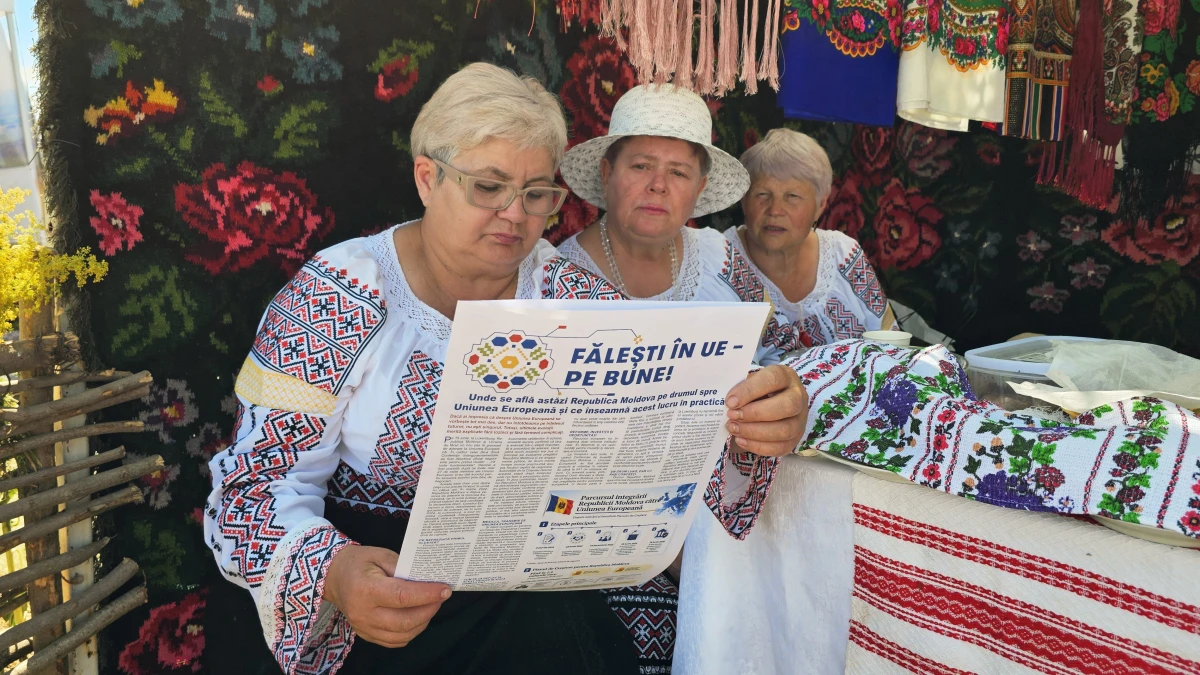
Implemented by People in Need Moldova, in partnership with the National Rural Development Network LEADER and EcoVisio, the campaign is part of the “ActEU for Moldova – Active Communities for European Integration” project, funded by the European Union. Activities are organised in cooperation with Local Action Groups (LAGs) and civil society organisations across the country.
Launched in July, the campaign has already reached several localities in the regions of Bălți, Fălești, Ocnița, Taraclia and Gagauzia, joining local fairs, festivals and celebrations. The meetings have given participants an opportunity to learn more about the EU’s contribution to community development, the Republic of Moldova’s accession process and the opportunities offered through cooperation with the EU, while also discussing questions and myths surrounding European integration.
In the north of the country, the campaign joined events where conversations about Europe naturally came together with local traditions and everyday community life.
In Fălești, we took part in the “În ospeție la Movila Măgura” Festival and the “Pădurile Făleștene” Festival in Pruteni commune. We discovered places where crafts, local food, music, dance and traditions remain an important part of community identity. In Hădărăuți, Ocnița district, we joined the “Vatra satului” Festival, where residents spoke openly about their needs – from investments in rural infrastructure and opportunities for local producers to preserving their identity and traditions.
In Bălți, young people were at the centre of the meetings. Through quizzes, games and interactive activities, they tested their knowledge about the EU, discussed myths and realities of European integration, and shared their ideas about the changes they would like to see in their localities.
In the south of the country, the campaign highlighted ethnic and cultural diversity, alongside the traditions that shape the character of local communities. In Gaidar, in the Autonomous Territorial Unit of Gagauzia, we took part in the Aydar Kılım Festivali – Carpet Festival, where we discovered Gagauz culture and the traditional art of carpet weaving, passed down from generation to generation. Beyond conversations about heritage and traditions, we also discussed the future of the Republic of Moldova, European integration and the impact of this process on people and communities.
In Taraclia, the 25th edition of the “Unity in Diversity” Ethnocultural Festival brought together traditional music, dance, costumes and food, showcasing the cultural richness of the Bulgarian community in the region. The gathering also provided an opportunity to discuss the role of diversity in a society where different cultures and traditions coexist and enrich one another.
While every locality has its own traditions and priorities, all the meetings had one element in common: dialogue. The conversations started with people’s questions and concerns and moved towards topics such as local development, European opportunities and the future of the Republic of Moldova.
Closer ties with the European family can be felt in everyday life: through the decisions people make, cooperation between citizens and authorities, respect for and promotion of human rights, as well as investments in infrastructure, culture, education, social services and healthcare. And “Moldova in the EU – for real!” continues to bring these conversations closer to people through new meetings in communities across the country.


